A market gap, filled.
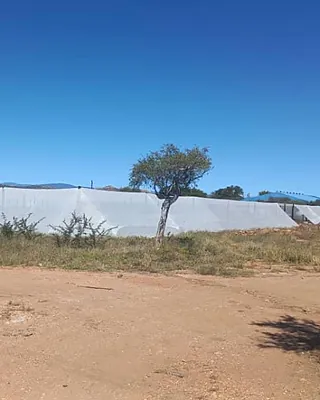
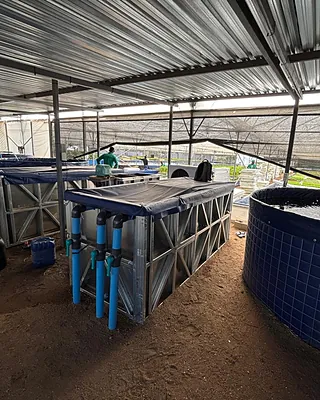
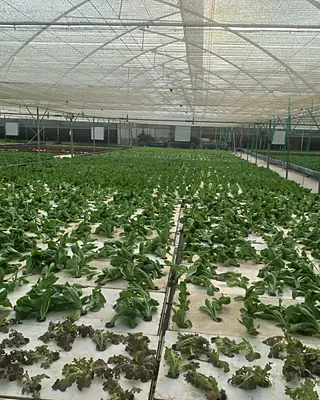
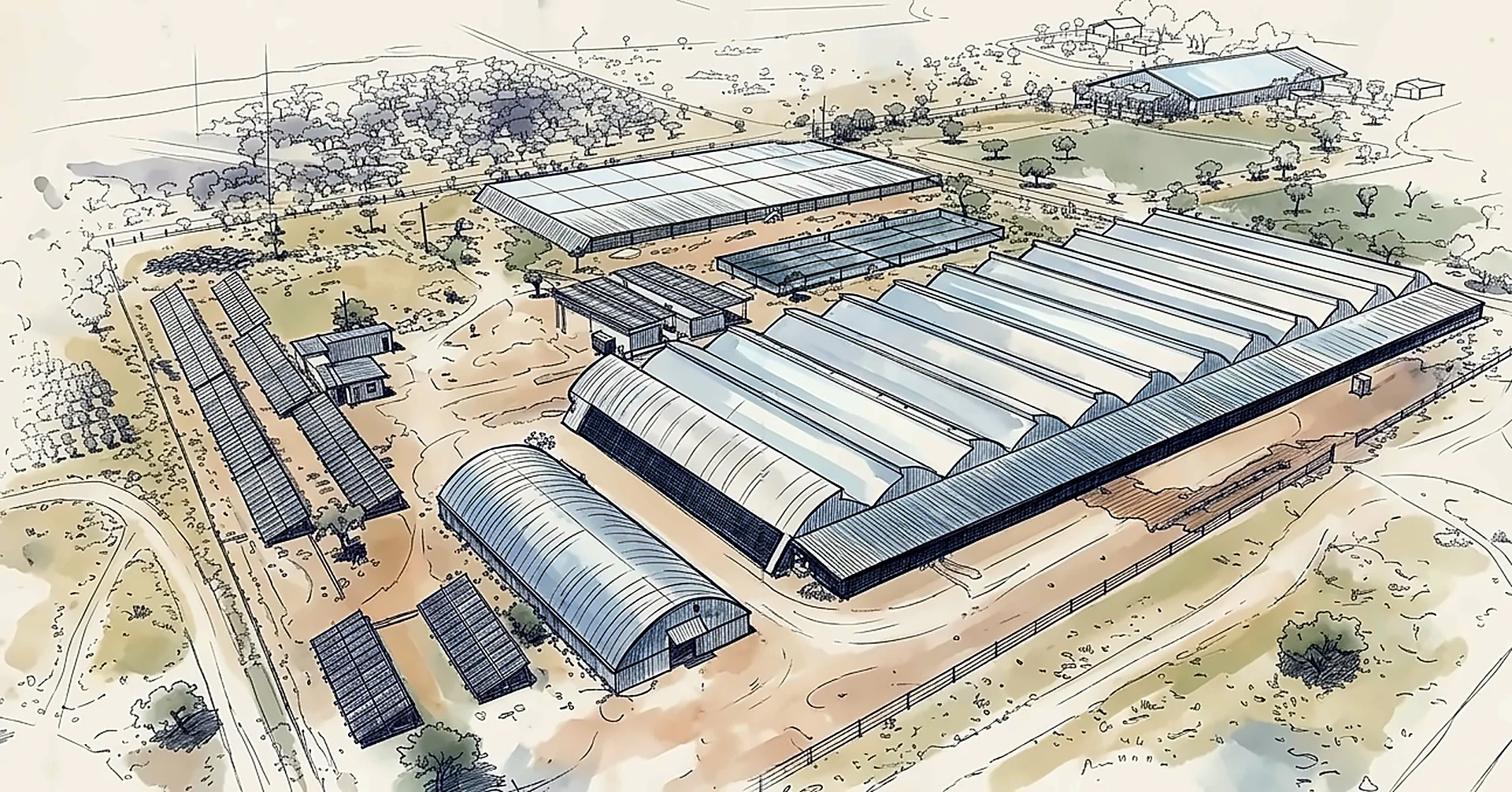
A farm 70 km north of Windhoek that grows, at home, the lettuce and herbs Namibia used to import: one of the largest aquaponics facilities in Africa, with 9,800 m² under cover and six independent growing systems.
Fresh food that travels more than a thousand kilometres arrives dearer and older.
Distance is priced in
Fresh produce crosses the border by road, often from more than a thousand kilometres away. Every kilometre shows up in the price on the shelf.
Days lost on the way
A lettuce pillow pack used to travel about 1,600 km to a Windhoek shelf, giving up days of shelf life in transit.
A supply chain run from across the border
Only about a third of formally marketed horticulture is grown in Namibia. Where local supply at retail scale and standard is missing, the country imports what it could grow (Namibian Agronomic Board, via The Brief, Dec 2025).
Demand for local supply was there. Supply at scale was the gap.
National policy already pulls toward local production: the Namibian Agronomic Board's Market Share Promotion scheme requires traders to buy a minimum share of fresh produce from Namibian growers. The minimum is currently 47%, up from 5% when the scheme began in 2005 (Namibian Agronomic Board). See the market data.
Retailers want consistency, shelf life and food safety, all three, every week. That is the gap we built into.
One site. Seed to shelf.
Everything the product needs is on one farm, so nothing waits on a supplier or a truck.
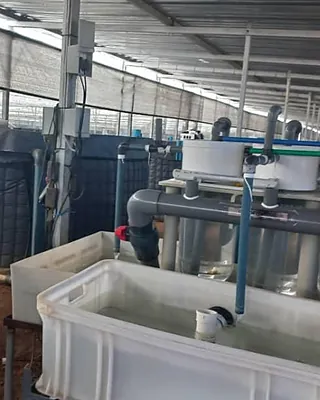
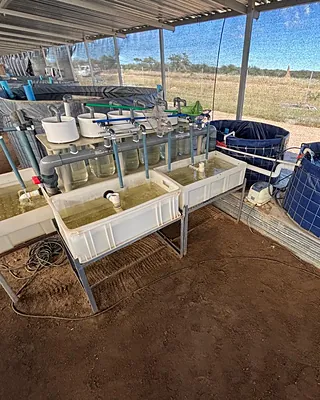
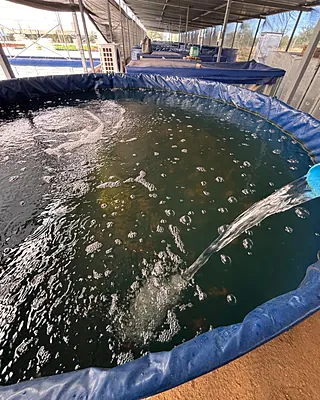
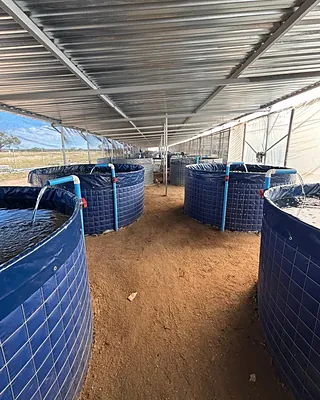
Hatchery
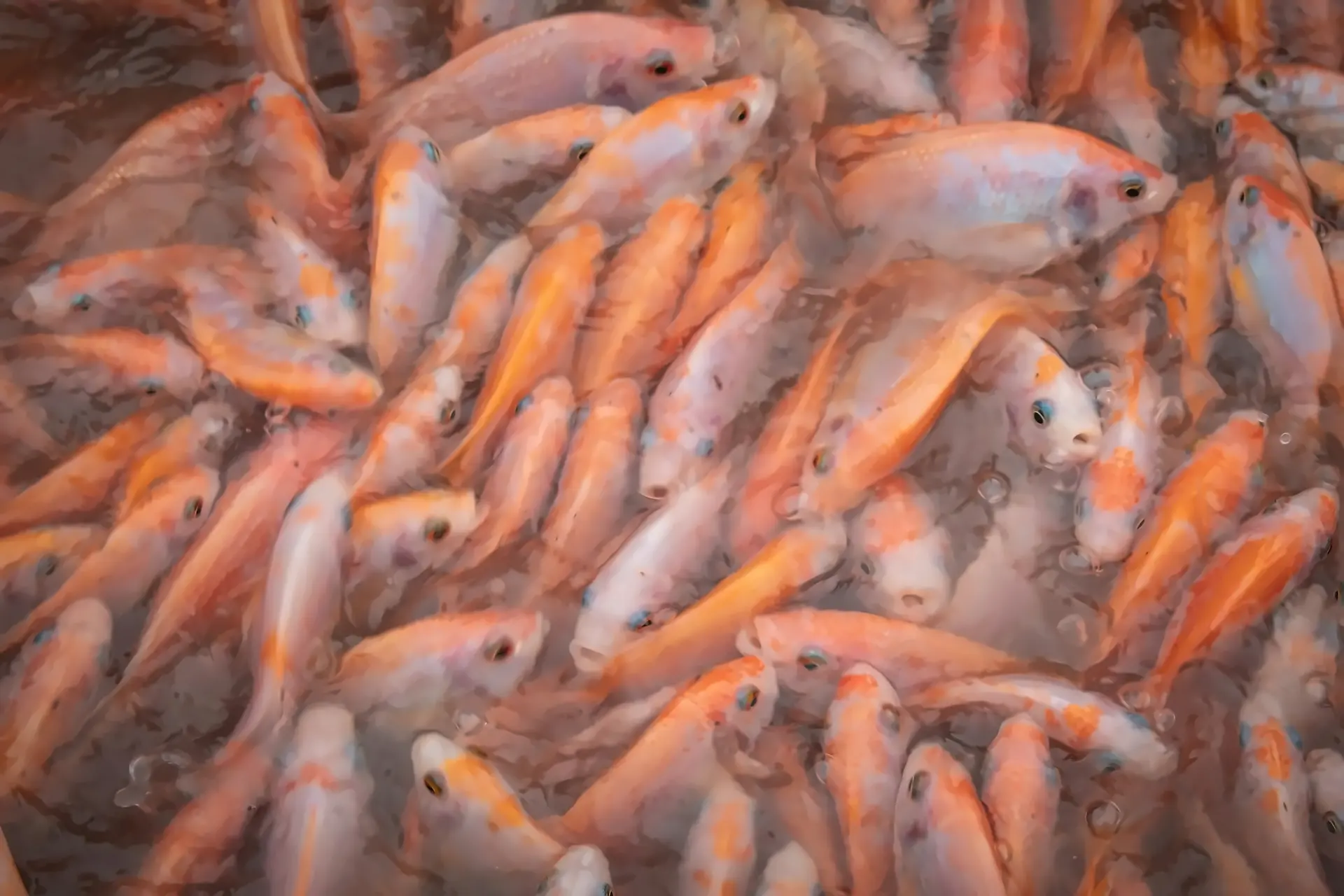
Our own red tilapia, selected for Namibian heat and cold winter nights.
Own stockSeedling house
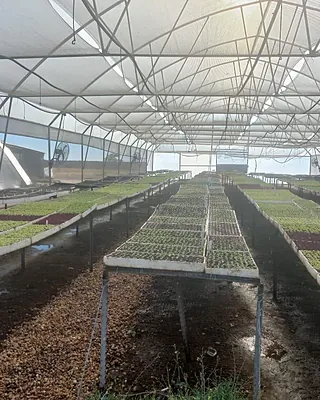
A weekly sowing programme matched to retail orders.
Weekly sowingAquaponic greenhouse
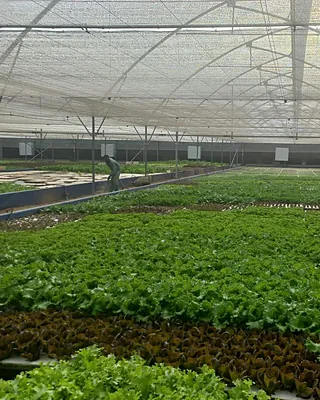
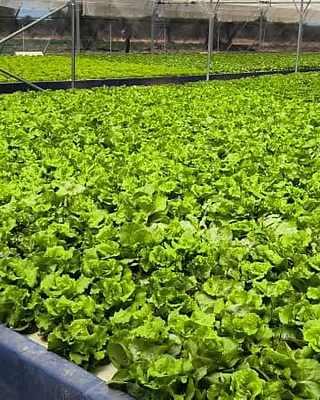
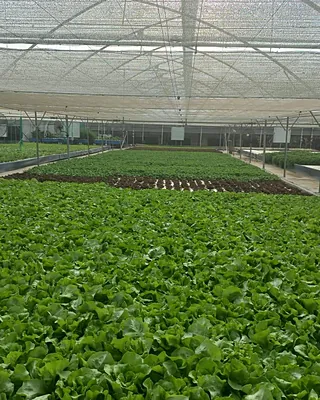
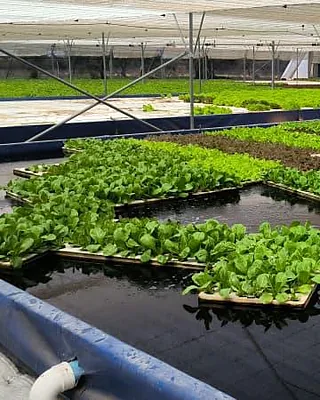
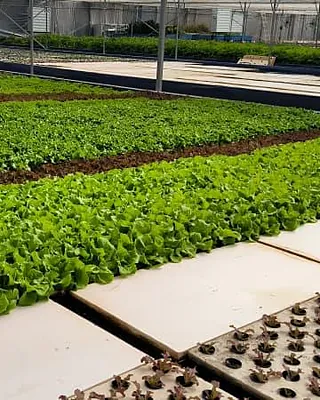
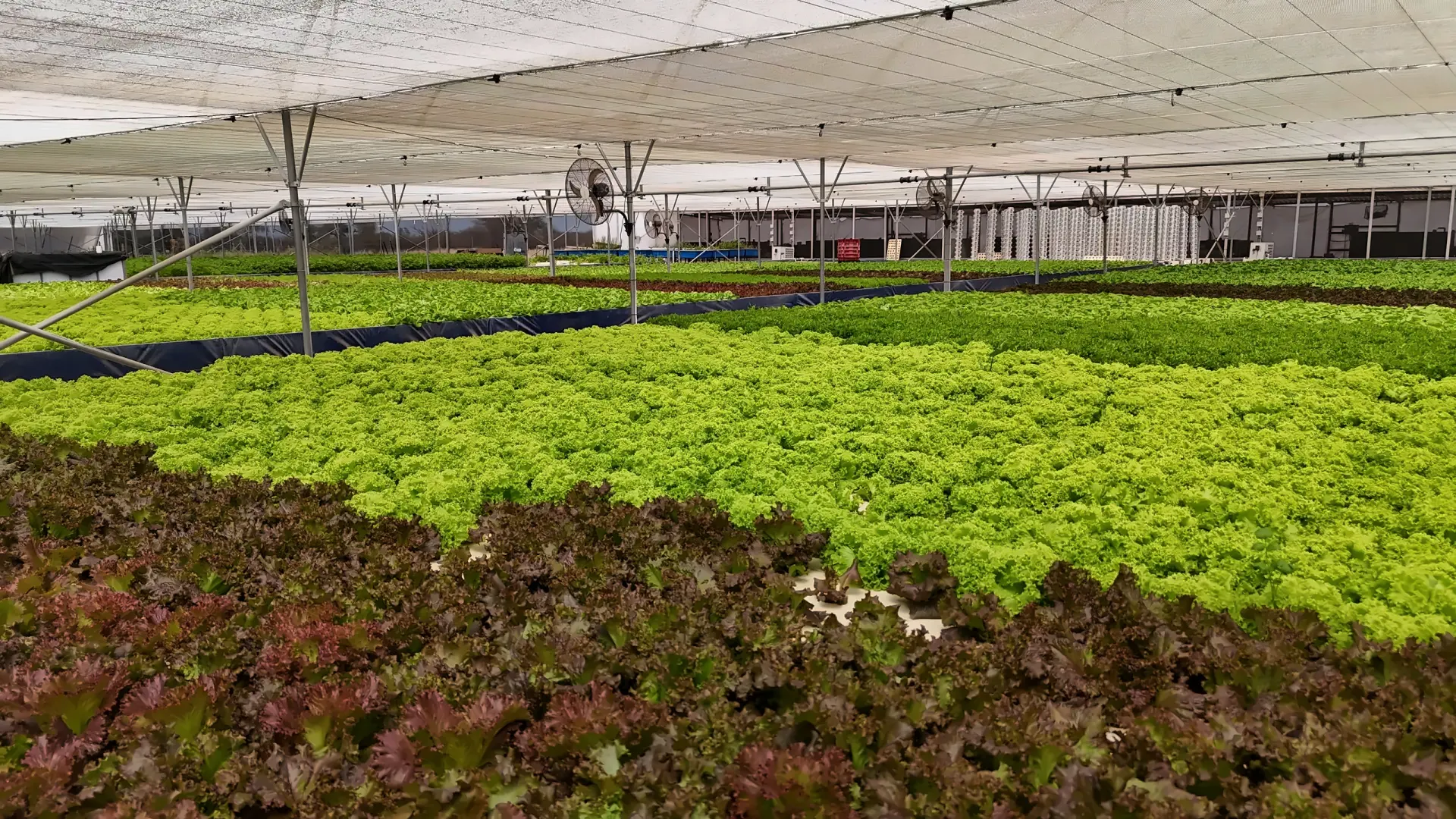
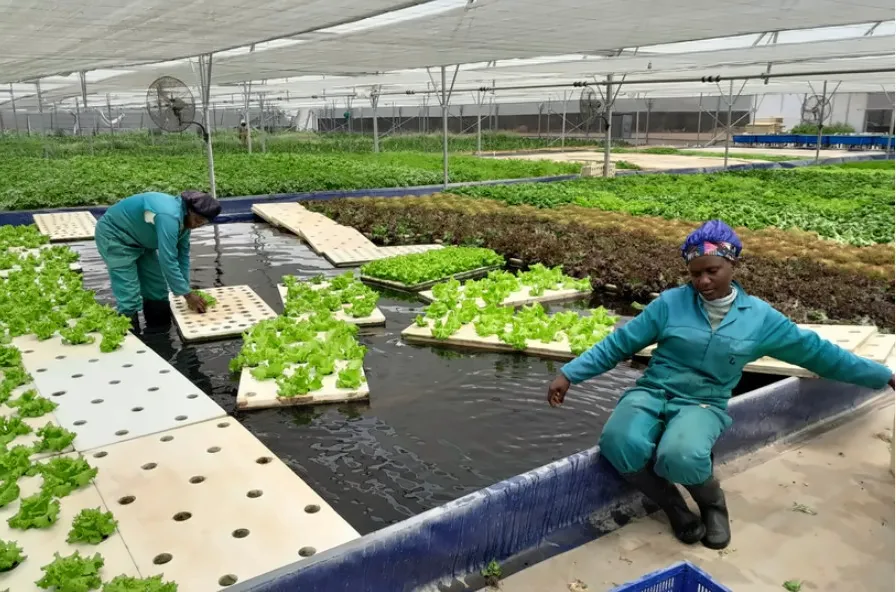
Floating-raft beds for lettuce, celery, leeks, spring onions and soft herbs.
5,000 m²Net house
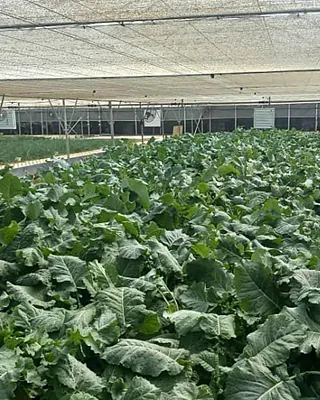
Soil beds for herbs and leaf crops that prefer soil, such as rocket and baby spinach.
4,800 m²High-care packhouse
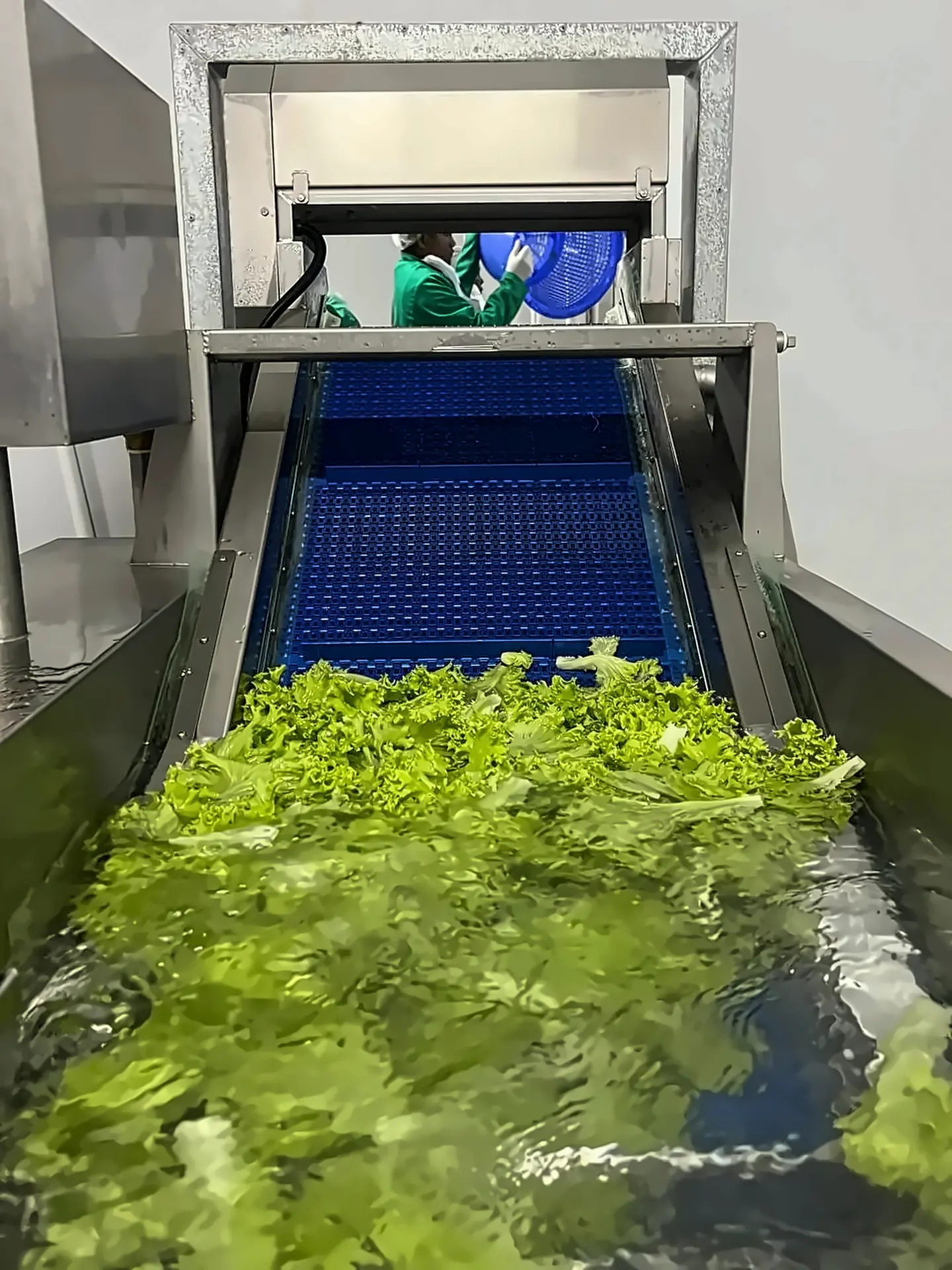
Temperature-controlled washing, drying and packing, with cold storage before and after.
Cold chainOwn power
An off-grid solar system from SolarSaver, our strategic energy partner, with a generator as backup.
Off-grid solarResults the market can verify.
We would rather show you four numbers than ten adjectives. Each one is either a public policy fact, a company figure, or an estimate we label as ours.
estimated fall in the price of fancy lettuce since we entered the market in late 2023, with quality rising as price fell.
less water than growing the same crop in a field. Rainwater harvested from the roof reduces borehole use.
lettuce plants planted out every week, as capacity, to a fixed specification all year.
jobs, most of them permanent.
A closed gap creates room to build.
One farm does not close a national import gap. What it does is prove the gap can be closed, and show four groups of people exactly what that is worth to them.
- 01
For investors
An operating assetAn operating asset with a record that can be verified on site, and a playbook that can be repeated rather than reinvented. Project detail is shared under a non-disclosure agreement, and participation is by conversation and subject to documentation.
- 02
For the local economy
Value that staysSkilled jobs, local procurement and import substitution: 35 jobs, most of them permanent, and value kept in Namibia instead of leaving the country with every truckload.
- 03
For retailers and food service
A supplier you can plan aroundA local grower that can hold a weekly programme to a fixed specification, shorten the chain from days to hours, and put fresher product on the shelf at a lower landed cost.
- 04
For the next project
The method travelsThe same reasoning applies beyond salad and beyond primary farming, into processing. What was learned here about water, nutrients, data and food safety is what the next project starts with. Potato processing is in development.
Quality rose as the price came down. That is the part the market noticed.
Fancy lettuce, Namibia, since late 2023 · Oribi estimate
Aquaponics is the method, not the headline.
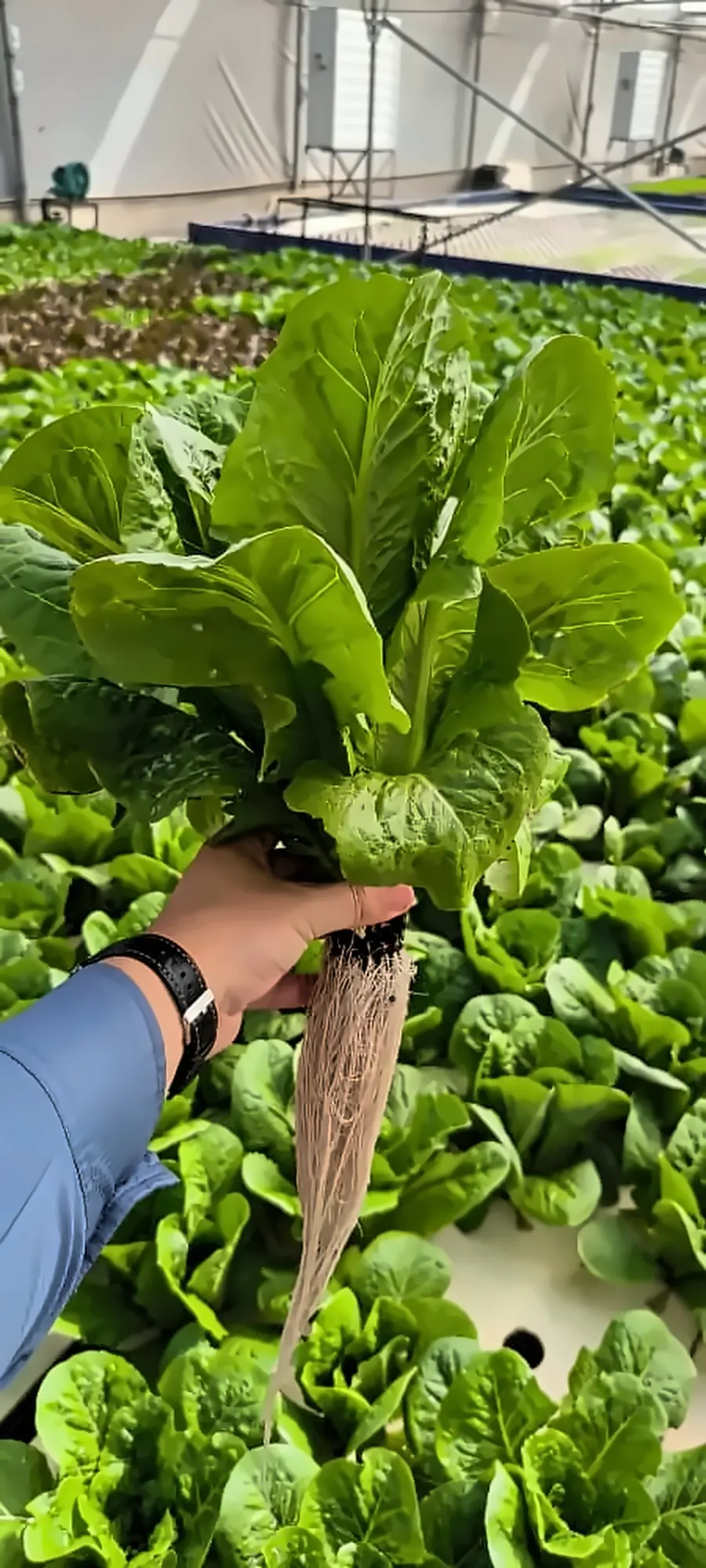
Fish provide the nutrient base. We measure the water, add precisely what each crop stage needs, and recirculate it. Fish do not supply everything a crop needs, which is where many commercial systems struggle. We test every system, make small regular water changes, and harvest lettuce up to 11 times a year to the same specification each time.
Fish
Our tilapia provide the nutrient base.
Water
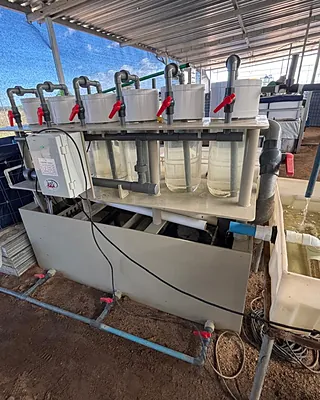
We test it, add precisely what each crop stage needs, and recirculate it.
Plants
Lettuce, herbs and greens grow on floating rafts and clean the water for the fish.
Wash and pack
Leaves are washed, dried and packed on the farm in a high-care facility.
Shelf
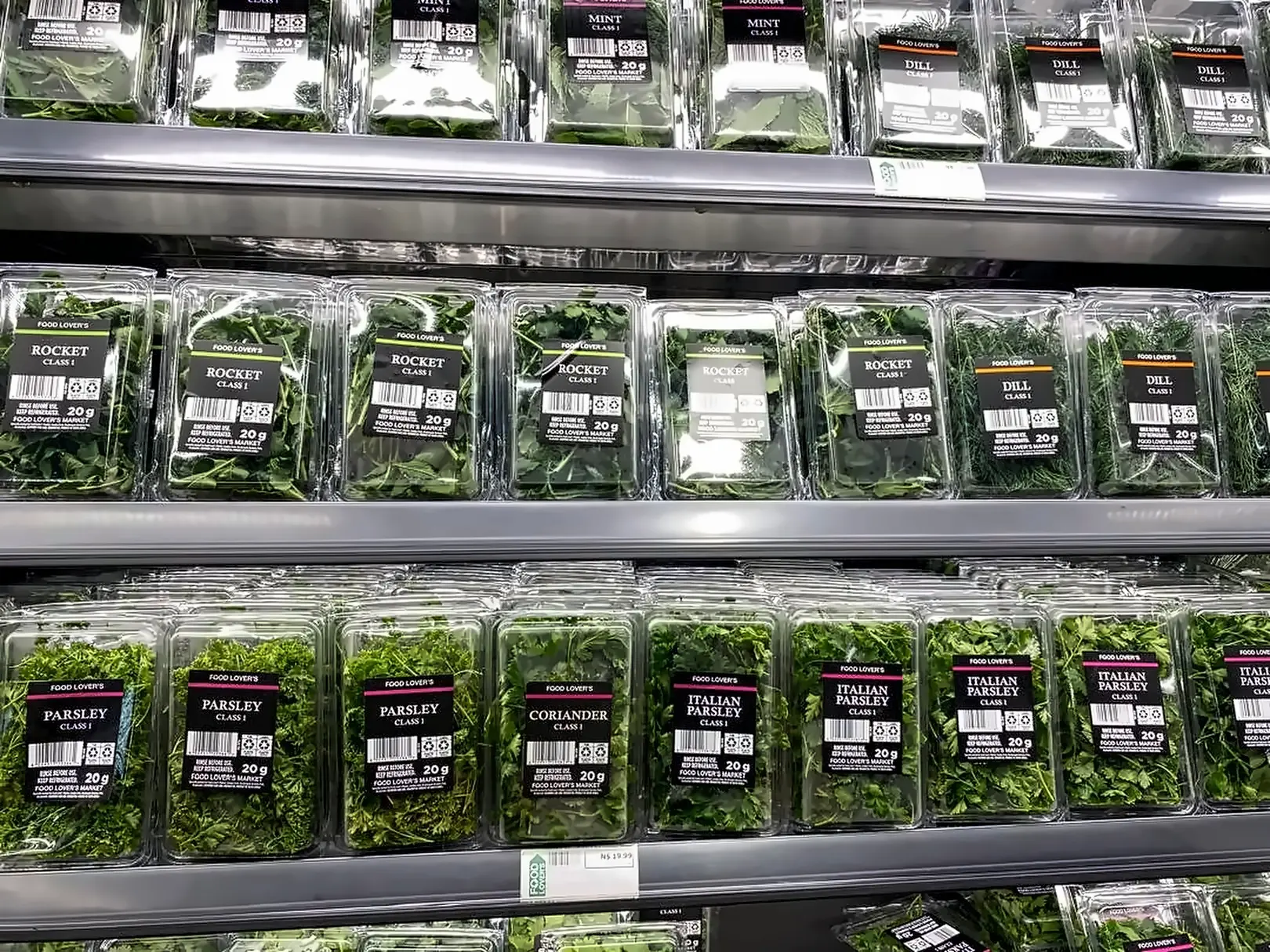
Kept cold all the way to the store.
Every batch tracked from seed to pack.
batch records since April 2025, across 74 weekly batches.
water parameters logged in all six systems: pH, salinity, nitrate, potassium, calcium, dissolved oxygen and temperature.
days of packhouse temperature and wash-water records.
When a number drifts, we see it before the crop does.
Built, fixed and measured.
The farm that supplies retailers today is the result of three years of building, fixing and measuring. This is how it got here.
- Late 2023
First retail supply
Oribi lettuce reaches Namibian retail shelves, grown 70 km from Windhoek instead of imported.
- The hard part
Rebuilt from the water up
Early production needed to become as consistent as retail supply demands. We reviewed the whole process, rebuilt how we manage water and nutrients, and wrote our own production tracker.
- April 2025
Every batch on record
Batch-by-batch tracking from seed to pack begins, with packhouse temperature and wash-water records kept alongside.
- 2026
Phase 1B completed
The aquaponic growing area doubled, the net house and seedling house were added, and the packhouse was expanded.
Local GAP
Certified under Primary Farm Assurance, covering food safety, quality and traceability.
Namibian Agronomic Board
A registered producer, part of the national horticulture system that sets the local share importers must buy.
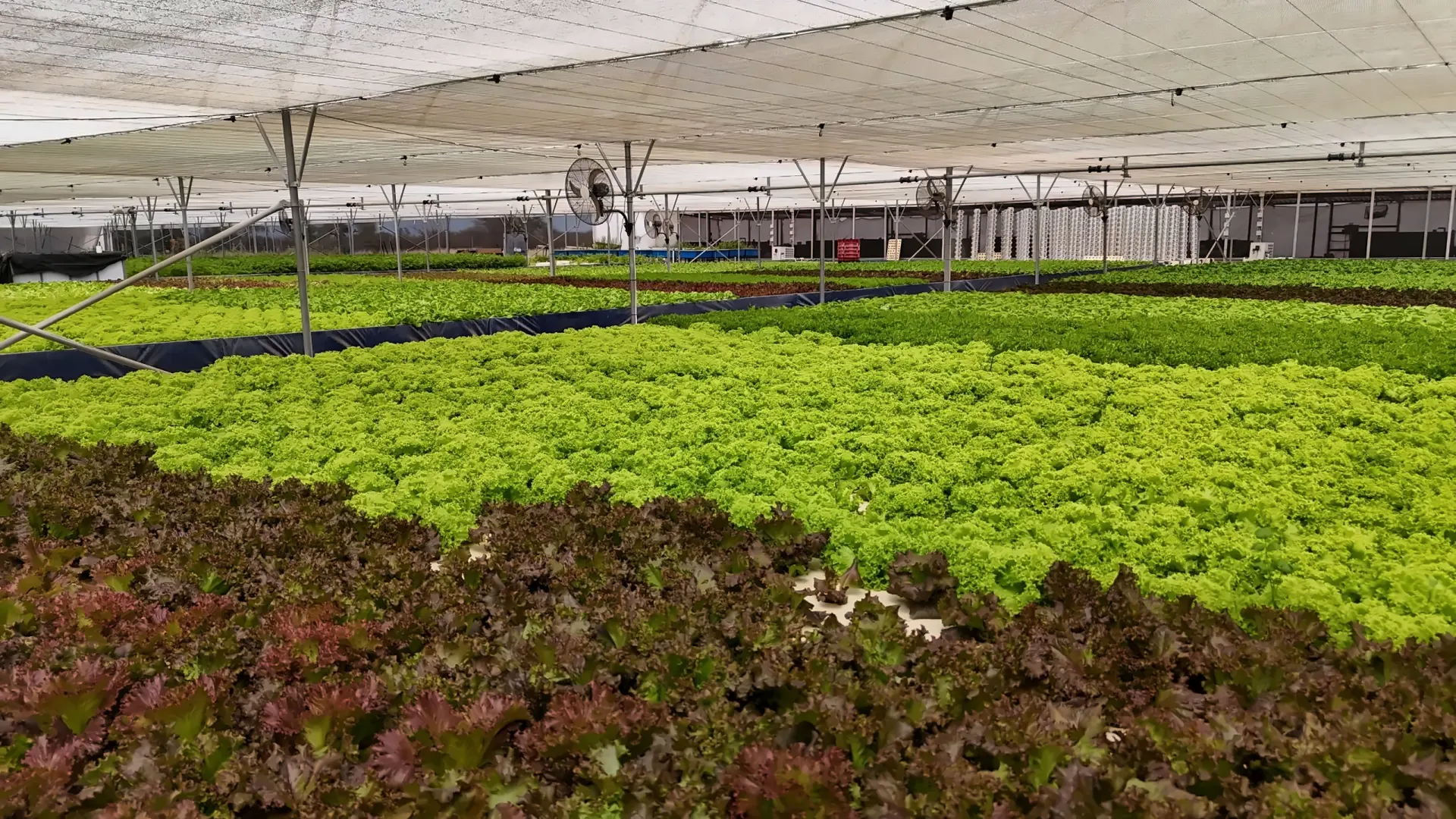
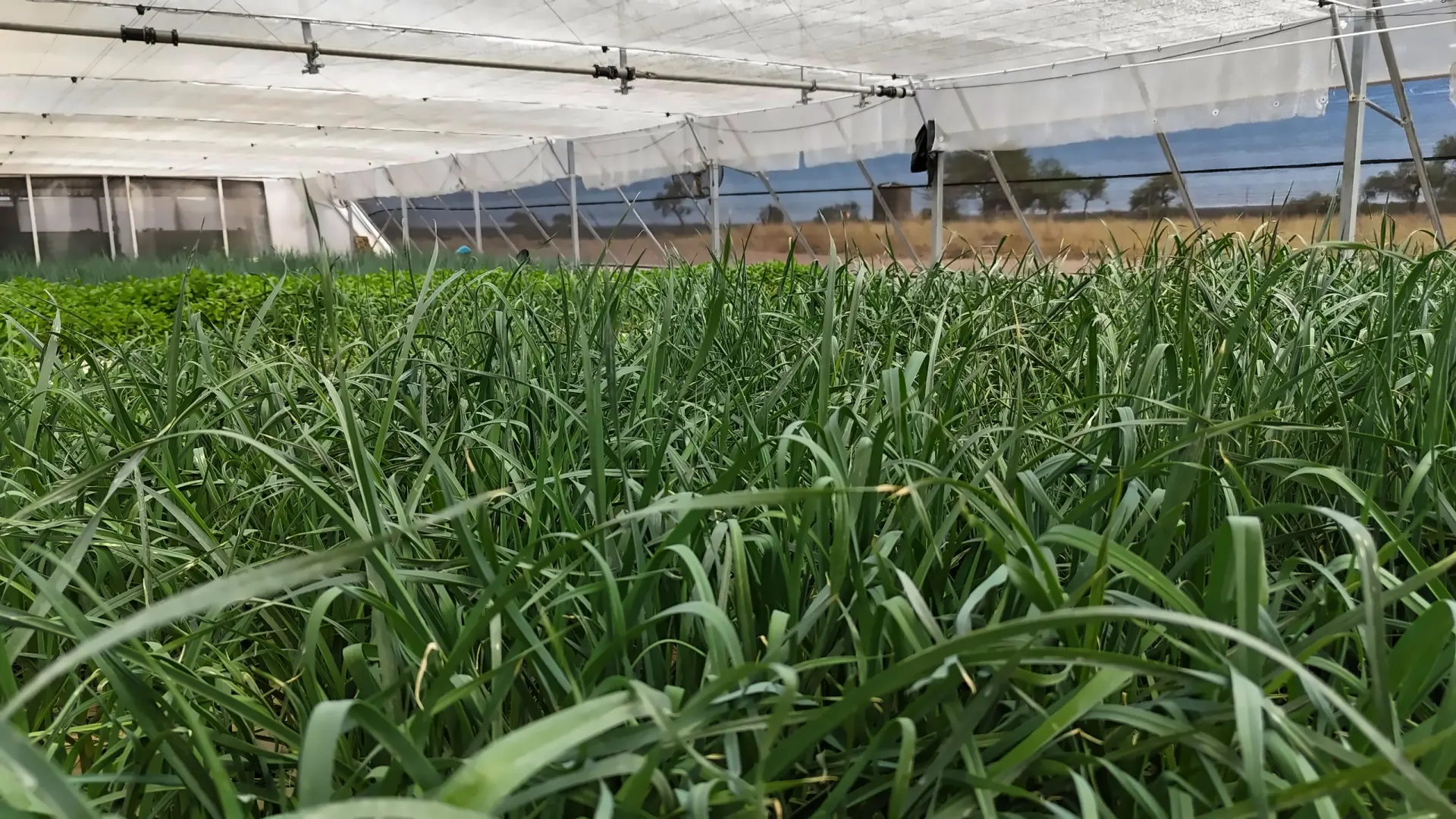
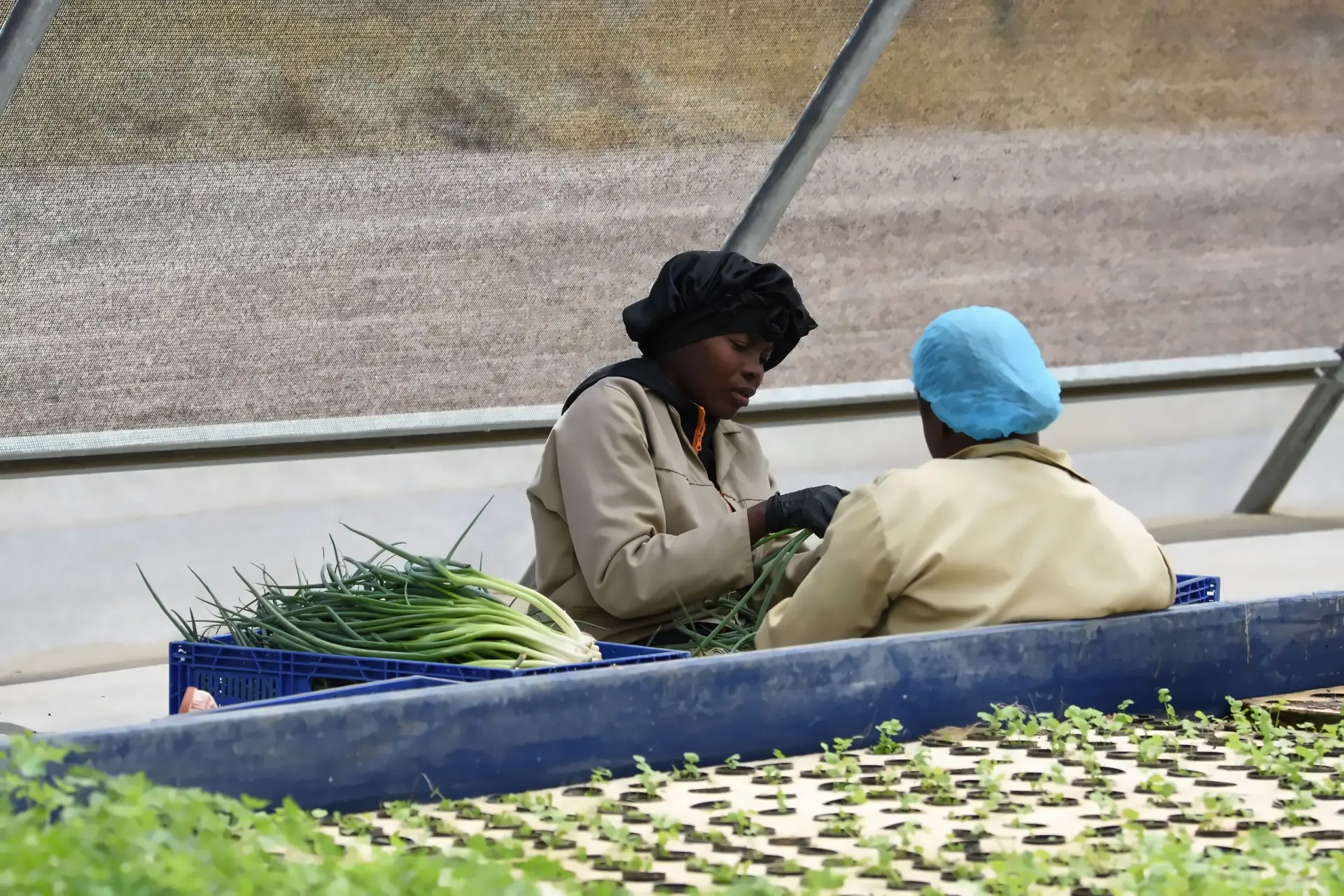
Lettuce, herbs and leafy greens.
The greenhouse grows lettuce on floating rafts, with celery, leeks, spring onions and soft herbs. The net house grows the crops that prefer soil, such as rocket and baby spinach. Thyme, rosemary, oregano and lemongrass are grown to order.
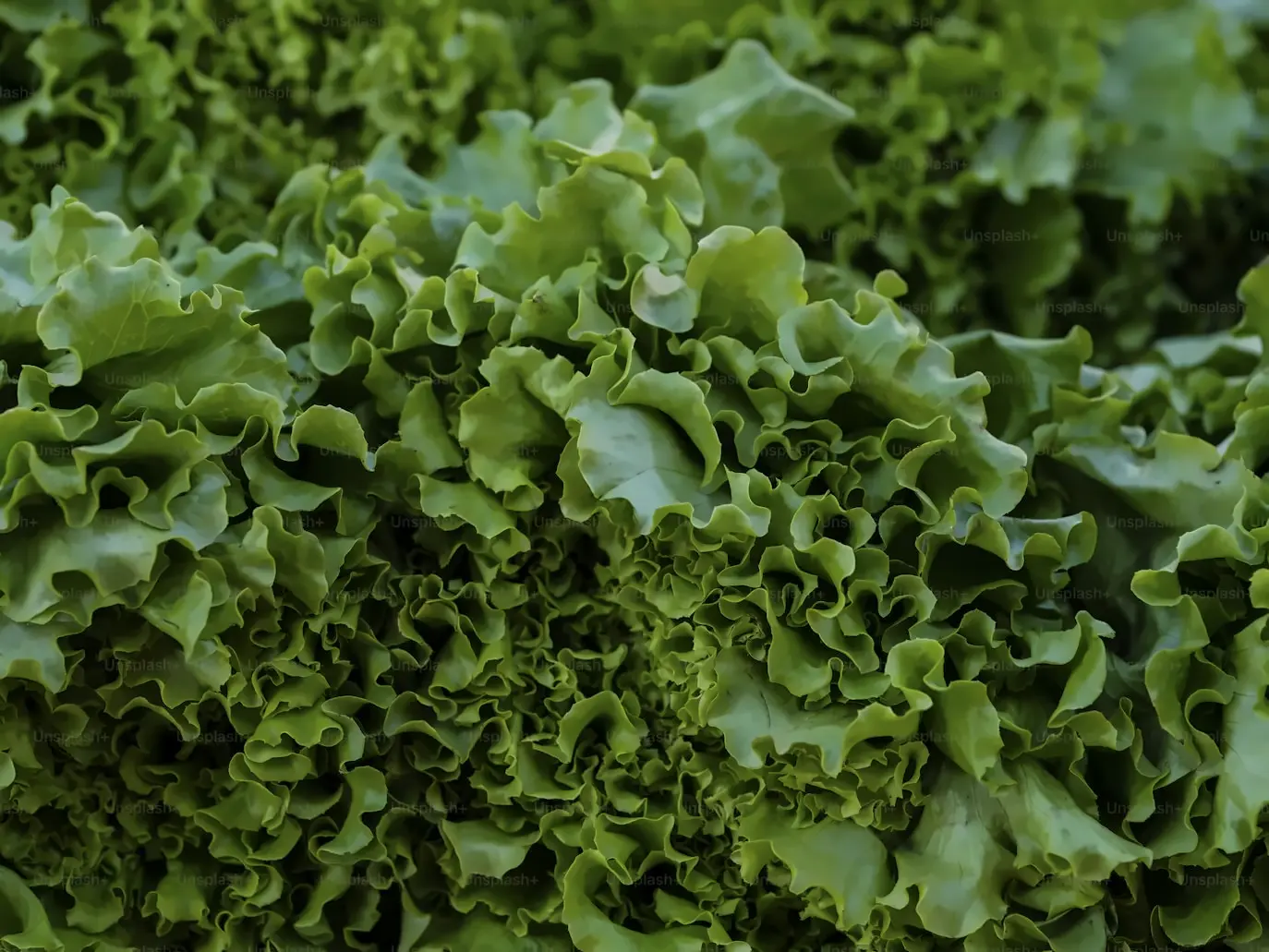
Crisp, frilly, Lolla Rosso, red butter, salad cos, little gem and mixed leaf
Basil, coriander, dill, chives, mint, parsley and Italian parsley
Rocket, spinach, baby spinach, celery, leeks and spring onions
Thyme, rosemary, oregano and lemongrass
A local supplier you can plan around.
Weekly programmes, pack specifications, price lists and lead times for retailers, wholesalers and food service.
Supply enquiries
Retailers, wholesalers and food service
A farm you can visit, and a method you can repeat.
Visit the farm and meet the team. Project detail is shared under a non-disclosure agreement, and participation is by conversation and subject to documentation.